
Abstract
Engineering software, encompassing tools for electrical and mechanical design such as CAD (Computer-Aided Design), CAE (Computer-Aided Engineering), EDA (Electronic Design Automation), FEA (Finite Element Analysis), CFD (Computational Fluid Dynamics), and PLM (Product Lifecycle Management), is a critical and costly asset for manufacturing firms. Despite its importance for product development and timely project delivery, these assets often receive inadequate management attention. This white paper examines the challenges of managing engineering software licenses, reviews current approaches, and proposes best practices using TeamEDA’s License Asset Manager with Usage Monitoring (LAMUM™) to optimize costs, ensure compliance, and enhance operational efficiency.
Introduction to Engineering Software
Engineering software is indispensable for modern manufacturing firms, enabling the design of complex products and supporting accelerated research and development (R&D) for shorter time-to-market and higher quality. These tools, used for design, synthesis, verification, physical layout, 2D/3D drawing, FEA, CFD, and PLM, can cost up to $50,000 per license. According to Gartner’s latest forecast (3Q24 Update), worldwide IT spending is projected to total $5.74 trillion in 2025, an increase of 9.3% from 2024, with software spending expected to grow 14% to $1.23 trillion, up from 11.7% growth in 2024. Within this context, manufacturing companies are estimated to spend 1–1.5% of annual revenues on product development software, with electronics firms potentially spending more due to the high cost of specialized applications.
| Category | 2024 Spending (Millions of U.S. Dollars) | 2024 Growth (%) | 2025 Spending (Millions of U.S. Dollars) | 2025 Growth (%) |
| Data Center Systems | 333,372 | 40.3 | 474,883 | 42.4 |
| Devices | 720,681 | 4.6 | 759,615 | 5.4 |
| Software | 1,114,604 | 11.7 | 1,232,145 | 14.0 |
| IT Services | 1,614,756 | 4.8 | 1,686,321 | 4.4 |
| Communications Services | 1,256,287 | 2.2 | 1,282,592 | 2.1 |
| Overall IT | 5,039,699 | 7.4 | 5,740,000 | 9.3 |
Mechanical design software, while less expensive per seat, is used by larger teams, resulting in comparable overall expenditures for electrical and mechanical engineering departments.
The Vice President of Engineering typically holds budget responsibility, but stakeholders such as the CIO, finance, and IT teams also have an interest in these assets. Effective management is essential to maximize value, minimize disruptions, and ensure compliance with vendor agreements. LAMUM provides a comprehensive solution to address these needs, offering tools to track inventory, monitor usage, and streamline administration.
Trends in Engineering Software Licensing
Engineering software licensing has evolved significantly, reflecting changes in vendor strategies and organizational needs:
- Perpetual Licenses with Maintenance: Historically the dominant model, perpetual licenses involve a one-time purchase with annual maintenance fees, typically 20% of the purchase cost. This remains popular but is being overtaken by newer models.
- Subscription Licenses: Increasingly favored, subscriptions use expense dollars, offer flexibility to adjust license counts (e.g., quarterly or semi-annual remixing), and can be charged to specific projects. However, they may cost more over five years compared to perpetual licenses and require diligent administration due to expiring license keys.
- Token-Based Models: Companies purchase tokens, with each application requiring a specific number to run, controlled by time-based licenses. Tokens are deducted from a pool during use, offering flexibility but requiring careful tracking.
- Debit Card Model: A less popular approach where usage is charged hourly or daily, proving expensive and losing traction.
The shift to subscriptions and time-based licenses introduces challenges, such as managing expiring keys to prevent project disruptions. Additionally, compliance with vendor agreements is increasingly critical, driven by regulations like Sarbanes-Oxley, which demand documentation to verify adherence to licensing terms.
Challenges in License Management
Managing engineering software licenses presents several challenges:
- Data Proliferation: The volume of data, vendors, resellers, contacts, internal users, license agreements (perpetual, subscription, maintenance), purchase orders (POs), license keys, expiration dates, and license servers, creates complexity.
- Lack of Data Sharing: Multiple stakeholders (3–5 per organization) maintain separate spreadsheets, Outlook files, and paper folders, leading to unsynchronized and error-prone data.
- Data Disappearance: Critical license information can be lost when key personnel leave, as it is often stored in personal files.
- Timely Alerts: Expiring license keys can halt projects if not addressed proactively, and late renewal negotiations weaken bargaining positions.
- Inadequate Reporting: Generating reports on inventory, maintenance status, renewal costs, expiration dates, server details, vendor contacts, or PO history is time-consuming and often delayed.
- Access to Agreements: License agreements, stored in legal or contracts departments, are often inaccessible to managers responsible for implementation, hindering compliance efforts.
These challenges result in inefficiencies, increased costs, and compliance risks, underscoring the need for a robust management solution.
Current Management Approaches
Most organizations rely on outdated methods to manage engineering software licenses:
- Manual Tools: Spreadsheets, Outlook or other email software, business cards, and paper folders are common, with 30% of data being outdated, erroneous, or missing. These methods are labor-intensive and error prone.
- Limited Sharing: Data is rarely shared across teams, leading to duplicated efforts and inconsistencies.
- Manual Expiration Tracking: Few organizations have automated alerts, relying on manual spreadsheet reviews or vendor notifications, which average three weeks or none at all (30% of cases).
- Custom Software Development: Some companies develop in-house tools, investing significant resources. However, these solutions are costly to maintain and may not match the capabilities of specialized tools.
These approaches are inefficient compared to a dedicated solution like LAMUM, which offers a cost-effective alternative to in-house development.
Best PracticesforEngineering License Asset Management
LAMUM, developed in collaboration with major manufacturing companies (electronics, defense, and mechanical), provides a client-server solution using reliable web-server components to address license management challenges:
- Centralized Data Management: Consolidates information on vendors, contacts, licenses, license keys, servers, and agreements in a secure, shareable database, reducing data proliferation and loss.
- Comprehensive Reporting: Generates instant reports on inventory, maintenance status, renewal costs, expiration dates, server details, vendor contacts, and PO history, streamlining decision-making.
- Utilization Metrics: Tracks license usage to identify trends, average and maximum concurrent usage, and user patterns over any time period. This helps determine training needs, optimize license counts, and adjust license types (e.g., LAN, WAN, node-locked).
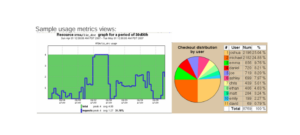
- Compliance Support: Ensures adherence to vendor agreements and Sarbanes-Oxley requirements by providing access to terms and conditions, usage data, and server details. Approximately 55% of LAMUM users leverage utilization metrics for compliance.
- Cost Savings: Enables 15–25% savings by identifying unused licenses for elimination, optimizing license mix during project phases, and addressing denials through strategic adjustments (e.g., adding licenses or converting types).
- Proactive Alerts: Notifies managers of expiring keys, enabling timely renewals and uninterrupted project operations.
LAMUM’s features significantly help organizations to balance demand, reduce administrative time, and protect critical data, delivering an ROI measurable in weeks.
Conclusion
Senior engineering management must prioritize the responsible oversight of expensive engineering software licenses, which represent a significant investment for manufacturing firms. Accurate, accessible information is key to controlling costs, ensuring uninterrupted service, and maintaining compliance. LAMUM delivers value through:
- Cost Reduction: By identifying underused licenses, starting renewals early, and balancing demand to avoid unnecessary purchases.
- Service Continuity: By tracking expiration dates to prevent project disruptions.
- Improved Planning: By providing historical expense data and renewal insights.
- Compliance Assurance: By making license agreements accessible to managers.
- Efficiency Gains: By centralizing data and reducing administrative efforts.
- Data Protection: By securing information in a robust database.
Saving just 10% on license costs can significantly impact profitability. LAMUM is an essential tool for achieving far greater outcomes with up to 25% savings, so that engineering software assets are managed effectively.
About TeamEDA, Inc.
TeamEDA, Inc., headquartered in Derry, NH, specializes in integrated software licensing management for engineering applications, including CAD, CAE, EDA, FEA, CFD, and PLM.
TeamEDA’s proprietary License Asset Manager with Usage Monitoring (LAMUM™) combines asset management and usage monitoring into a best-in-class solution. Learn more at www.TeamEDA.com.
Contact Information and Resources
For a demonstration or to start a free14-day trial of LAMUM, contact:
- TeamEDA, Inc.
- Address: 84W Broadway, Derry, NH 03038
- Phone: (603) 656-5200
- Email: [email protected]
- Website: www.TeamEDA.com
- Request for Demo: www.TeamEDA.com/contact-us
“License Asset Manager” and “LAMUM” are trademarks of TeamEDA, Inc.
